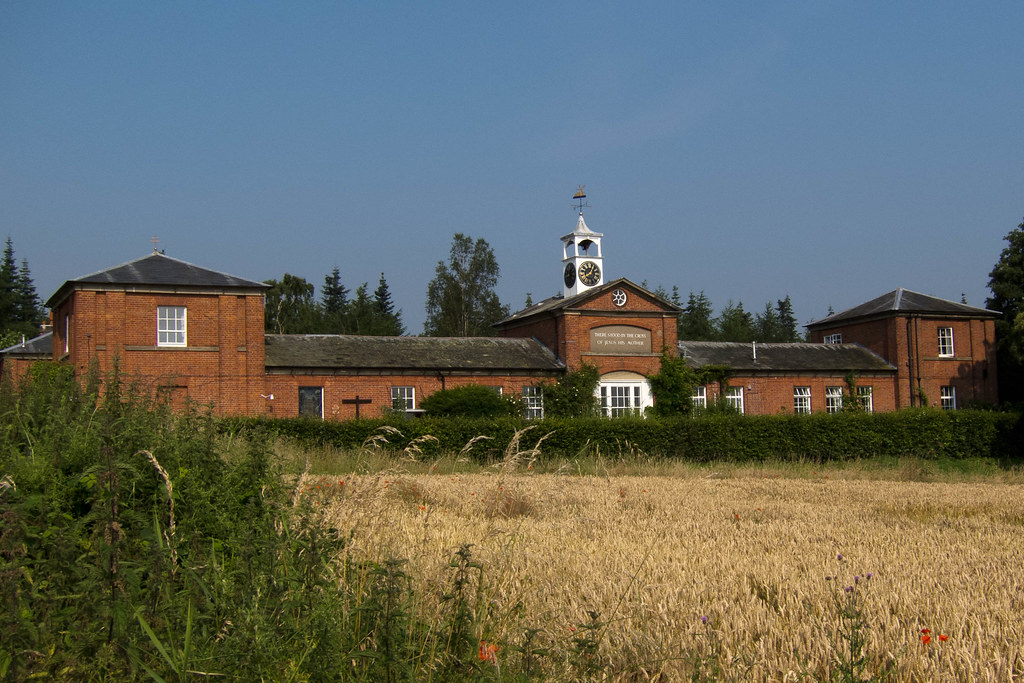
Glasshampton Monastery is a house of prayer of the Society of Saint Francis (SSF). As in all our houses, our life here revolves around the three ways of service of prayer, study and work, but with the particular emphases of the daily prayer centred on the monastery chapel, and the ministry of welcoming those who visit and those who come to stay as brothers and sisters in the love of Christ.
The house itself was originally a stable-block, built for a large mansion now ploughed under the neighbouring field. The stables were built around 1810, but the main house burned down soon afterwards and was never rebuilt. After this, one corner of the stables was used as a gamekeeper’s cottage while the rest mostly became derelict.
In the early years of the twentieth century, Father William Sirr of the Society of the Divine Compassion (SDC) felt called by God to leave his work in the East End of London to begin a contemplative life of prayer in a more secluded setting. In the winter of 1918 he moved to Glasshampton and established the religious life in this place.
For nearly 20 years Fr. William lived here, leading a life of silence, contemplation, intercessory prayer and manual labour. He renovated the building to make it habitable again. People came to stay for shorter or longer periods of time, finding in him a spiritual director of great holiness. He had always hoped to found a contemplative community at Glasshampton, but as the years went by it became clear that no community was going to form around him.
Fr. William died in 1937, and in 1947 the Society of St. Francis were invited to come to live at Glasshampton.
From that time the monastery has acted as a place where a group of professed brothers seek to live out the contemplative side of the Franciscan charism, where novice brothers receive part of their training, and where guests come to be refreshed by the quiet prayerfulness of the house. The life of the house is focussed on the chapel where we gather for prayer 5 times a day, saying the Daily Office and celebrating a daily Eucharist, supplemented by times of silent prayer morning and evening. The working hours of the day are filled with cooking, gardening, maintenance, and looking after the guests who come to visit or stay.
Videos!
Two short videos from the SSF brothers living in Glasshampton Monastery.
William of Glasshampton
In the early years of the twentieth century, Father William Sirr of the Society of the Divine Compassion (SDC) felt called by God to leave his work in the East End of London to begin a contemplative life of prayer in a more secluded setting. In the winter of 1918 he moved to Glasshampton and established the religious life in this place. For nearly 20 years Fr. William lived here, leading a life of silence, contemplation, intercessory prayer and manual labour. He renovated the building to make it habitable again. People came to stay for shorter or longer periods of time, finding in him a spiritual director of great holiness. He had always hoped to found a contemplative community at Glasshampton, but as the years went by it became clear that no community was going to form around him. Fr. William died in 1937, and in 1947 the Society of St. Francis were invited to come to live at Glasshampton.
Glasshampton took its name from the first manor that was built near the village of Astley about ten miles from Worcester. For a time it was the farm house of a group of French Benedictines and known as Astley Priory. After passing through many hands, in the eighteenth century it became the property of a curate of Astley Church, the Rev. D.J. Crookes. It was a house of great magnificence, having, it was said, as many windows as days in the year, as many doors as weeks, and as many chimneys as weeks. Crookes restored the whole structure, making it still more magnificent. He added the stables for his horses, which Fr. William S.D.C later turned into a monastery. In the spring of 1810 it the house was burnt to the ground through the carelessness of a workman dropping his cigarette ash. It was rebuilt, but was burnt down again, just before there was to be a house warming. It was never to be rebuilt. The stables were built in the form of a quadrangle, but when Fr. William got there, only one corner of the building was habitable. William, who had been superior of the S.D.C., had long wanted to live the contemplative life on a strict Benedictine model. He moved into the habitable part of the building in November 1918, just after the war, to live a very austere contemplative life, hoping for recruits, but without success. He lived in complete poverty. In the course of time, with the help of benefactors, he turned the horse boxes into cells, and built an enclosed cloister round the quadrangle with lawn and a Calvary in the centre. And he planted fourteen rose trees round the garth, which were sometimes used for a Stations of the Cross. Under one of the two towers of the building he built a chapel, under the other a library. Next to the main chapel was a small chapel for the Blessed Sacrament, dedicated to St. Bernard, but now turned into a sacristy. The big chapel was dedicated to St. Mary at the Cross, which became the name of the monastery. William was buried in the garth with the help of his friend, Lord Baldwin, the Prime Minister, who lived nearby. He died in March 1947, after a time in a nursing home for priests. The next year the monastery was bought by a trust, which included Fr. Gilbert Shaw and Mother Clare of the Holy [31/32] Name, Burnham, who was a great devotee of Fr. William. For a time during the war it was occupied by some nuns as a retreat house, and then by a Quaker home for evacuated children.
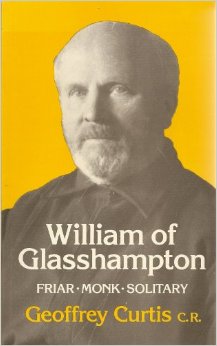
THE STORY OF GLASSHAMPTON by Brother Alban and Brother Ramon SSF
Click to access The-story-of-Glasshampton.pdf
In the nave of St Peter’s Church, Astley, can be seen a flat stone with the name:
JOHN DAWSON (Architect of Glasshampton) 1707
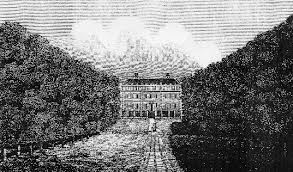
Glasshampton is the house depicted in an engraving by Thomas Nash in his History of Worcestershire (1781), and has been described as resembling a French chateau, with high ornamental palisading along its front, and approach by a long avenue of trees At the time of the Civil War, Astley belonged to Sir John Winford who resided at Astley Manor. In the early 1700’s John Winsford’s grandson Thomas, inherited the manor, and other estates from a Sir Thomas Cookes whose family had earlier intermarried with the Winfords. As this was on condition that he adopted the Cookes name he styled himself Sir T Cookes Winford. In 1707 with his new found wealth he built the first recorded manor house of Glasshampton. Leaving no children, the Cookes inheritance reverted to another branch of that family.
Astley was left to a Thomas Geers, whose family had earlier intermarried with the Winfords. To inherit, he too had to change his name to Winford. Thomas now Winford’s daughter and heir Sarah, married Sambrooke Freeman and moved with him to his Wren house, Fawley Court in Buckinghamshire. Sarah survived her husband and left Astley and the Manor house to the Rev. D. J. J. Cookes. Now this property belonged to the Revd. D.J. J. Cookes, Curate of Astley, he decided, having ample means, to renovate or rebuild it entirely. It has been suggested that the stables were added at this time, in 1809. The following year, it has been written, the house was burned to the ground, and was not rebuilt, the reverend squire fearing that the fire was a judgement on his extravagance. By 1815 he had sold the Cookes estates and lived in the more modest house of Woodhampton.
The date 1810 for the fire is given in J. L. Wedley’s Twixt Severn and Teme (1928). However, the stable clock, still in place, has a brass plate declaring that it was built for the Revd. J. J. Cookes by Samuel Thorpe of Abberley in 1813. It seems unlikely, therefore, that the house can have been completely destroyed or abandoned in 1810. The fact remains that at present there is no trace of the house above ground, and its actual site cannot be told with certainty. The stable remained intact, and it was this building that eventually became a monastery; The Revd. William Sirr was a member of an Anglican religious community, the Society of the Divine Compassion, at Plaistow, in East London. In 1906 his picture appeared in the Daily Mirror under a headline, “Clergy join the Procession of London’s Unemployed.” The caption went on to say, “Father William led the West Ham and Plaistow men with a banner bearing the words, ‘In the name of Christ we claim that all men should have the right to live. He had that year been elected Superior of the Society, which offi ce he held for six years. About 1911 he began to feel that he was being called to a life of prayer rather than that of active work. He was allowed a period of retirement, but his community was reluctant to release him. His time of testing was extended in 1915, at which time he went to live with the Cowley Fathers at Oxford. In 1918 he again requested permission to take up a life of monastic enclosure. Approval was still withheld at first. But by that time Father William had heard that the stables at Glasshampton would be available to him, and a new Superior allowed his release.
He was now 57 years old, and may have hoped that the community he wished to found would grow quickly, while he was still active and vigorous. This was not to be. In 1922 he was writing, “We stand for something no other Community stands for … quietness, hiddenness and implicity. It is a difficult time … there have been so many disappointments. But, thank God, we are getting a few years of tradition behind us, and after a few years of slow and steady progress we shall have won the confidence of a few. It is always difficult to go on with nothing to show … Men came to try the life, but none stayed. The stern self discipline of the ageing monk could be admired but not easily imitated. The diet was said to be atrocious, the chapel worship conducted at a painfully slow pace, and the life proved to be beyond surviving.
For eighteen years, Father William lived the life. Hundreds of men found him and drew strength to follow their own different vocations, but what he most eagerly waited and prayed for never came to pass. In the end he accepted this. “It is God’s will, therefore it was the best thing that could have happened.”Among his visitors was Stan1ey Baldwin, then Prime Minister, through whose offices permission was given for Father William’s body to be buried at Glasshampton. His last days were spent at the home of St Barnabas at Dormans, Surrey, where he died on Easter Day, 1937. His body was buried first at Lingfi eld, then re-interred at Glasshampton on 15th September (the feast of St Mary at the Cross) in 1939. In the meantime the premises had been purchased after an appeal and in 1938 placed in the hands of trustees. In the early part of the Second World War, Sisters of the Community of the Holy Cross, Haywards Heath, came to occupy the house for a time. For the remainder of the war it was used by the Society of Friends (Quakers). In 1946, the Society of St Francis was able to occupy it in a caretaker capacity. The Society, of which the original and largest house is at Hilfield in Dorset, had an interest in the poor and unwanted and in preaching. Its other houses were quite unlike Glasshampton. It was perceived that this house with its tradition of prayer and quiet might make a distinctive contribution to the life of the Society.
Later, in 1962, as the original trustees grew older, the premises were handed to the Fidelity Trust for use of the Society of St Francis as a house of prayer. It has been used most particularly for novices in the Society. After their first introduction to community life in a large Friary, they come to Glasshampton for a time of quiet reflection for some months: This is an opportunity for the deepening of prayer, for considerable reading, and for the chance of self-confrontation. The house is able to accommodate a few guests who are in search of quiet and seclusion. Such persons frequently express an interest in the background of the house and for their benefit this short account has been compiled.
HYMN FOR FATHER WILLIAM OF GLASSHAMPTON
Tune: Ave Virgo Virginum EH 131
1 For the saints in days gone by
Full of zeal and fervour,
For the witness of their faith
And their high endeavour,
Father, now we praise your name,
For you made them holy,
As we now remember them
Make us pure and lowly.
2 On this day and in this place
Well may we adore you
For your servant given to prayer
Father, we implore you;
His the vision of your love,
Prayer and consecration,
Making this a House of Prayer
And of dedication.
3 Well he bore his loneliness
Hope mixed with privation.
Faithful in the path of truth.
Joy and desolation;
Full persistent in the way,
Never did he waver,
Sending down the roots of prayer
Looking to the Saviour.
4 He lived out the life of prayer
And as seed was planted
In this consecrated ground,
And to him was granted
To behold. the face of God
In eternal glory
So we bear the yoke of prayer
Sharing in the story.
5 Father, Son and Spirit blest
Now to you be given ,
Praise within this House of Prayer
And in highest heaven;
May we follow in the steps
Of this man who loved you,
And at last with him to praise
Worship and adore you.
 Vocational Stories into Anglican Religious Life
I have been introduced to Brother Ramon’s writings, former guardian of Glasshamton. From there I have been introduced to Thomas Merton’s writings on meditative prayer. I am house bound but solitude and prayer have always been a significant part of my life in Christ.
Is it possible to have a spiritual director by Zoom or by letter? Would that cost me a lot of money?
some support would be so encouraging as I venture forward.
Gillian Arnold
LikeLike
Dear Gillian, this is Br Finnian responding.
Okay, so I’m not based in Glasshampton monastery so I don’t want to give any definitive answers. You can contact Glasshampton at: glasshamptonssf@franciscans.org.uk and ask them directly.
From my understanding brothers in other houses have offered spiritual accompaniment / direction on Zoom, but I don’t know if they have done this at Glasshampton. You could also write as well if you’d like to:
Glasshampton Monastery, Shrawley, Worcester WR6 6TQ
From my understanding spiritual accompaniment is always by donation, there is no fixed fee within SSF. I think people offer around £15-£20, but it’s a very personal thing. Don’t let money be a barrier though.
Website link: https://www.franciscans.org.uk/
Thanks!
LikeLike
Dear Brother
How kind of you to reply. I shall follow your directions with interest.
blessings and thank you.
Gillian
LikeLike