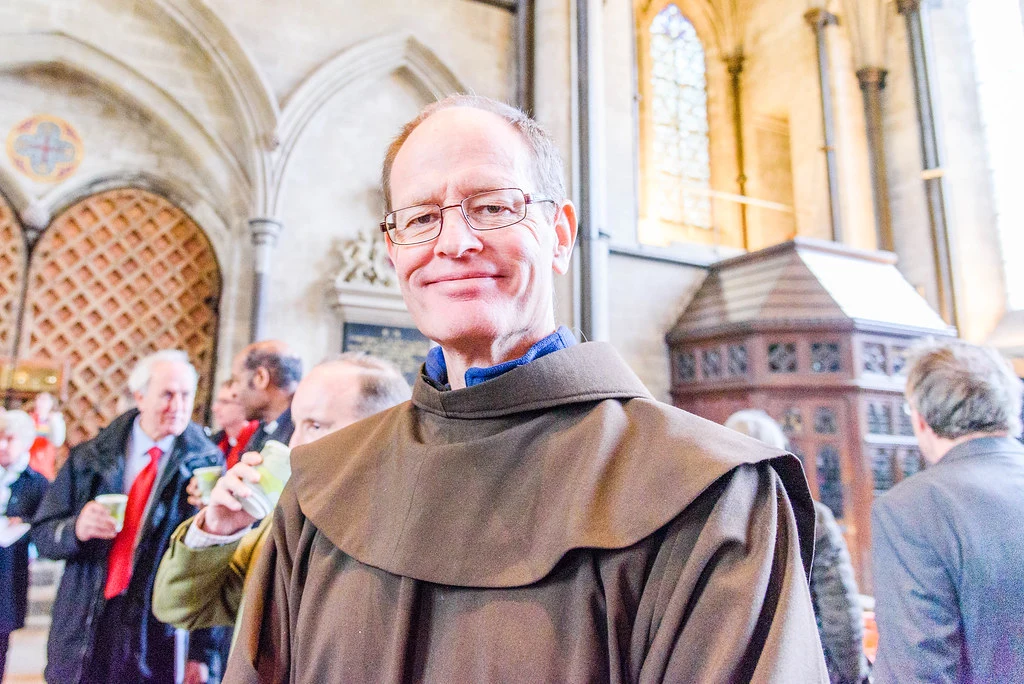
Hilfield Friary is an unusual place, a “thin” place you might say in Celtic spirituality. People come to Hilfield to get close to the land, and they help in the garden planting and harvesting, they help on the land with various conservation project and species surveys. They come for healing, to experience a gentle community life among brothers and volunteers. I have lived here for almost 6 years, it is unique in my experience of life as a brother—I think it has made a better man, too!
The friary just celebrated its Centenary December 18, 2021. During these hundred years, many men have come here to test their vocations as friars. The friary has welcomed wayfarers needing a place to stay for a brief time. Currently the ministry of the community is centred around hospitality to people who come for many different reasons—retreats, meetings, time away—and conservation and care for the land.
These ministries bring together the two great themes of Franciscan spirituality—care for the people God sends to us, and care for the earth. It makes it a prophetic ministry where we learn to live differently on the earth in peace and harmony with our neighbours near and far, and collaboratively with the earth seeking the healing and restoration of the environment.
During the course of a year, we might welcome as many as 3000 guests. As people come, they are welcomed with tea. We try to tell all visitors a bit about our life because we hope to encourage others to be aware it is possible to live differently on the earth and to find joy and fulfillment in community life.
The daily life of a brother centres around the chapel. We pray four times a day, morning, noon, evening and night. We pray using the Daily Office SSF, thus sharing the same prayer with our brothers and sisters all over the world. At Hilfield our daily Eucharist is at 12:15, a daily opportunity to receive the sacrament and dedicate ourselves anew to a life of gratitude. Two brothers are priests, two are not, but that does not prevent us from participating appropriately in the common worship.
The brothers eat together with community volunteers and guests, there are 26 or us who live at the friary, and with guests we often sit at table with 40-45 people. We each take our turn in the kitchen each week, working in pairs. All of our meat comes from our animals, and in season our vegetables and fruits too.
Apart of praying and eating together, the brothers all have different areas of work in the friary to play our part in the witness of the friary. We all do practical things like helping in the garden and on the land, as well as doing guest laundry, caring for the library and archives. One brother has a special care for tracking our carbon footprint and keeping a watchful eye on recycling, solar panels, logs for our biomass boiler. Unfortunately we all have to stay on top of various administrative tasks, answering emails, and a host of
other things common to life for many of us in the 21 st Century.
Volunteers participate fully in the community activities. Some are more eager to participate in chapel but all come on Sunday mornings. Volunteers work hard in the garden, on the land, in the kitchen and guest houses. But we seek our many opportunities to celebrate together. The brothers often meet with them to share our Franciscan spirituality.
With Franciscan brothers and others living together the friary has a special character: children laughing in the courtyard, riding their bicycles past the chapel windows. Afternoon tea at the friary is like an intergenerational family gathering with everyone laughing, making toast, drinking tea and catching up at the end of the day’s work.
Coming from the USA I have enjoyed the international character of our community—volunteers come from all over the world. And the opportunity to become acquainted with English life and customs has been a real pleasure. I’ve been disabused of some preconceived ideas, and come to treasure our special way of living in this corner of Dorset.
 Vocational Stories into Anglican Religious Life